Blog
TNW Co., Ltd | Working Principle of Automatic PAM Dosing System: Accurate Chemical Dissolution & Intelligent Dosing for Efficient Wastewater Treatment
TNW Co., Ltd | Working Principle of Automatic PAM dosing system: Accurate Chemical Dissolution & Intelligent Dosing for Efficient Wastewater Treatment
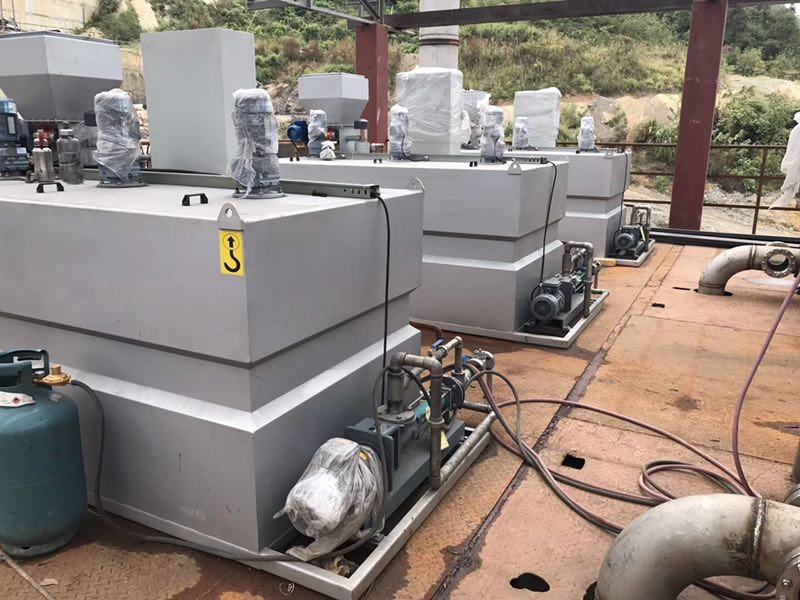
In wastewater treatment, sludge dewatering and solid-liquid separation processes, Polyacrylamide (PAM) acts as a core flocculant. Its dissolution concentration, curing condition and dosing accuracy directly determine flocculation performance and overall operation cost. Manual chemical preparation suffers from low efficiency, unstable solution concentration, frequent caking waste, over-dosing or insufficient dosage. The automatic PAM dosing system developed by TNW Co., Ltd realizes full-automatic operations including dry powder feeding, automatic dissolution, constant-temperature curing and precise chemical dosing, eliminating common drawbacks of manual operation and supporting stable and efficient running of environmental protection projects.

1. Core Working Principle: Coordinated Operation of Four Functional Units for Full-process Precision Control
1.1 Quantitative Dry Powder Feeding: Uniform Feeding and Anti-caking Design
1.2 Multi-stage Dissolution & Curing: Maximize Agent Activity via Full Activation
Primary dissolution (rapid mixing): Pre-blended liquid flows into the dissolution tank equipped with high-shear agitator rotating at 30~60rpm. Mild stirring disperses dry powder quickly without damaging long molecular chains of PAM.
Secondary curing (full activation): Preliminarily dissolved solution overflows into the curing tank for low-speed stirring lasting 30~60 minutes. Such process fully stretches and depolymerizes PAM molecular chains to form homogeneous high-activity liquid. Insufficient curing leads to poor flocculation while overlong curing causes agent failure; TNW equipment precisely controls curing time to balance chemical efficiency and production rhythm.
1.3 Liquid Storage Buffering: Uninterrupted Chemical Supply
1.4 Intelligent Precise Dosing: On-demand Adjustment to Cut Chemical Waste
Proportional dosing by flow: Automatically modify metering pump frequency based on inflow or sludge flow; higher flow brings larger dosage and vice versa to match actual treatment load.
Closed-loop concentration control: Connected with online turbidity meter and sludge concentration sensor, the system detects real-time water & sludge indicators and optimizes dosing volume to form closed-loop regulation for stable treatment effect.
Constant dosing: Fixed chemical supply set for working conditions with stable water quality.

1.5 PLC-centered Automatic Linkage Control for Unattended Operation
Automatic start & stop: Liquid level of storage tank triggers start and stop of chemical preparation without manual operation.
Automatic concentration stabilization: Dry powder feeding, water intake and stirring timing interlock mutually to maintain steady solution concentration.
Fault alarm & protection: The system gives alert and stops relevant equipment in case of material shortage, water cutoff, feeding blockage or pump breakdown.
Optional remote monitoring: Extra communication module supports real-time operating data checking and parameter adjustment via mobile phone or computer.
2. Unique Advantages of TNW Automatic PAM Dosing System
Optimized triple anti-caking structure combining pre-wetting, variable-frequency feeding and multi-stage stirring improves PAM utilization rate by over 20%.
Independent curing tank plus timing control ensures full activation of PAM molecular chains, lifting overall flocculation efficiency by around 30% compared with ordinary products.
Tank body is made of PP or 304 stainless steel with strong anti-corrosion and anti-aging performance, suitable for wastewater and sludge containing acid, alkali or oil pollutants.
Perfect matching with TNW screw press: The device automatically adjusts PAM dosage according to real-time sludge concentration and dewatering load of screw press, stabilizing sludge cake moisture between 75%~85% for superior solid-liquid separation.
Low operation & maintenance cost: Fully automatic running reduces regular labor work; precise dosing cuts unnecessary PAM consumption by 15%~25%.
3. Wide Application across Multiple Industries
Municipal wastewater: Sludge dewatering of residual activated sludge and dredged sludge from urban sewage treatment plants;
Industrial wastewater: Flocculation and sludge dewatering for papermaking, printing & dyeing, chemical, leather, food processing and electroplating industries;
Livestock breeding: Manure wastewater treatment matched with screw press for sludge reduction and resource recycling;
Other sectors: Coal washing, mineral processing and river regulation requiring flocculation sedimentation and solid-liquid separation.
Conclusion