News
Preferred Supporting Equipment for Sludge Dewatering: Fully Automatic PAM Dosing Unit by TNW Co., Ltd
Preferred Supporting Equipment for Sludge Dewatering: Fully Automatic PAM Dosing Unit by TNW Co., Ltd
For wastewater operation and sludge dewatering projects, PAM flocculant is a key consumable. Stable dissolving and dosing directly affect sludge cake dryness, chemical costs and compliance. Many factories use simple manual mixing barrels to cut costs, which create recurring troubles: dusty powder feeding, undissolved PAM lumps reducing drug efficiency, inconsistent liquid concentration leading to unstable flocculation, mandatory night-shift labor, and unexpected shutdowns when dosing cannot keep up with 24/7 screw press or DAF operation.

Three-Chamber Stepwise Integrated Design Eliminates PAM Caking
Pre-spray wet feeding prevents dry powder agglomeration
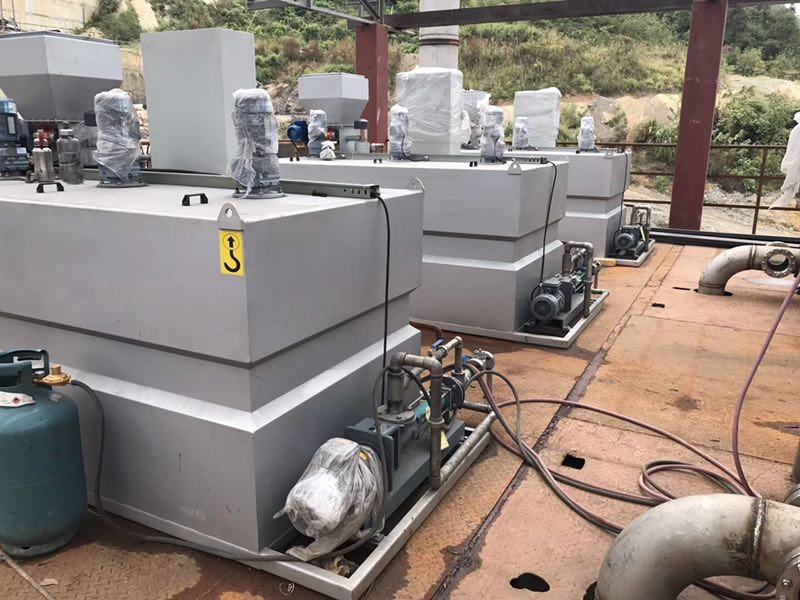
A sealed powder silo with variable-frequency spiral feeder is equipped with atomized water spray at the discharge port. Powder is evenly moistened before entering the dissolving tank. Water inflow and powder feed rate are interlocked to maintain a stable 0.1%–0.3% solution concentration free from human error.
Graded stirring protects polymer activity
Medium-speed agitation in the dissolving tank disperses moistened powder; low-speed paddle stirring in the curing tank lasts 30–60 minutes to fully stretch PAM molecular chains without shearing damage. Only fully cured liquid overflows to the storage tank for dosing, cutting PAM consumption by 20%–30% versus simple mixers under identical sludge throughput.
Overflow circulation enables round-the-clock continuous chemical supply
High and low liquid level sensors in the storage tank auto-start or stop the dissolving process. Dissolving, curing and liquid storage run simultaneously to produce qualified liquid unattended day and night, eliminating shutdowns caused by chemical shortage. The fully sealed frame avoids dust during feeding and prevents powder moisture caking to reduce raw material waste.